

Emotion intelligence · Private beta

Know what your images
do to the brain.

Amphora gives generative AI a biological basis for feeling. Our fMRI prediction engine maps any visual input to predicted brain activation — turning emotional outcome from a guess into a specification.

No spam. Unsubscribe anytime. Privacy policy

Developed by students at
Harvard University
Stanford University

Experiment 1 · May 26, 2026

We fine-tuned a language model using real brain signals. It worked.

Using TRIBE v2 — Meta AI's fMRI encoder — as the reward signal, we steered a 3B parameter language model toward higher predicted cortical activation in Broca's area over 200 RL training steps. The entire language network responded. Here's the data.

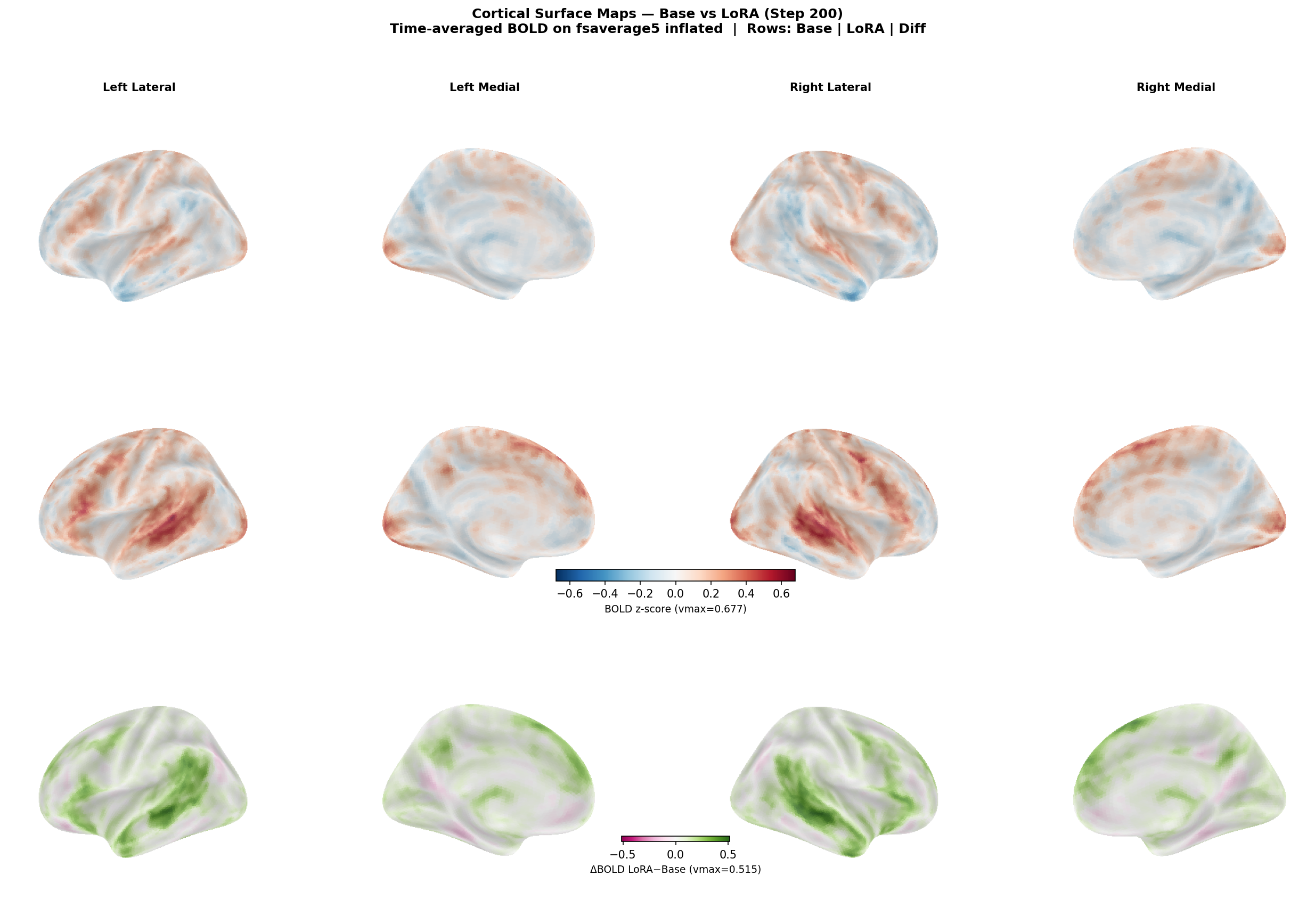
Cortical surface maps showing base model, LoRA fine-tuned model, and the activation differenceCortical surface — base · LoRA · Δ
+150%
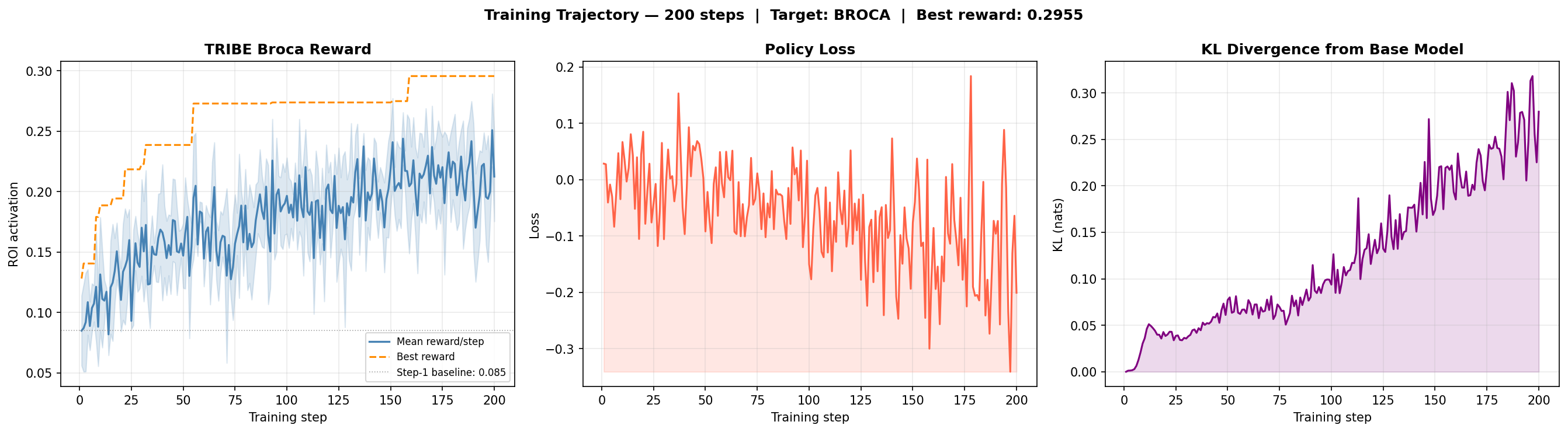
Broca's area reward gain over 200 training steps
×4.6
Global mean cortical BOLD increase (0.023 → 0.104)
20
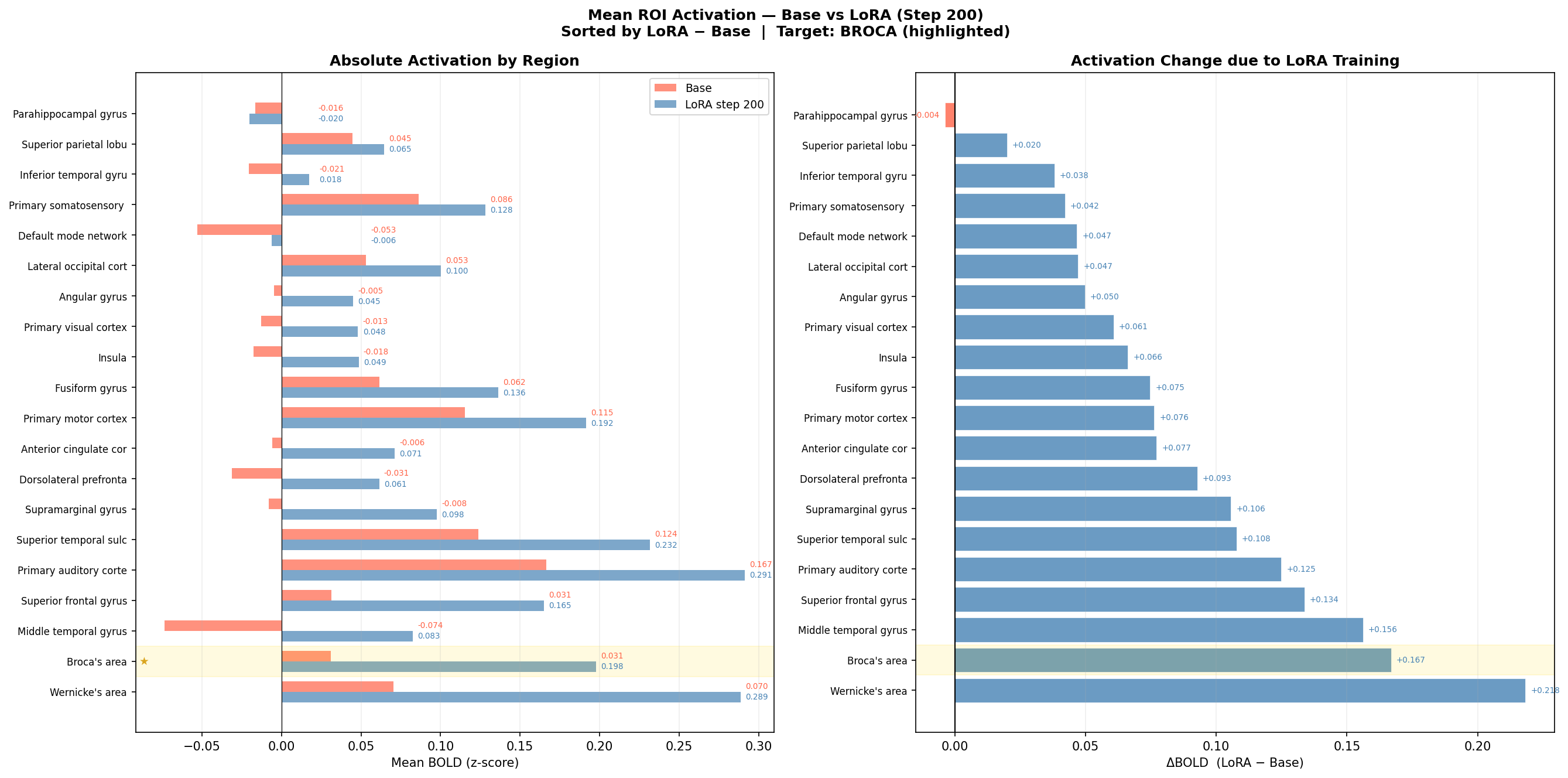
Cortical regions measured — 19 of 20 showed positive gains
Chart showing training trajectory: reward, loss, and KL divergence over 200 steps

Reward · loss · KL over 200 steps

Bar chart comparing 20 cortical ROI activations between base and LoRA models

20 cortical ROI activations — base vs LoRA

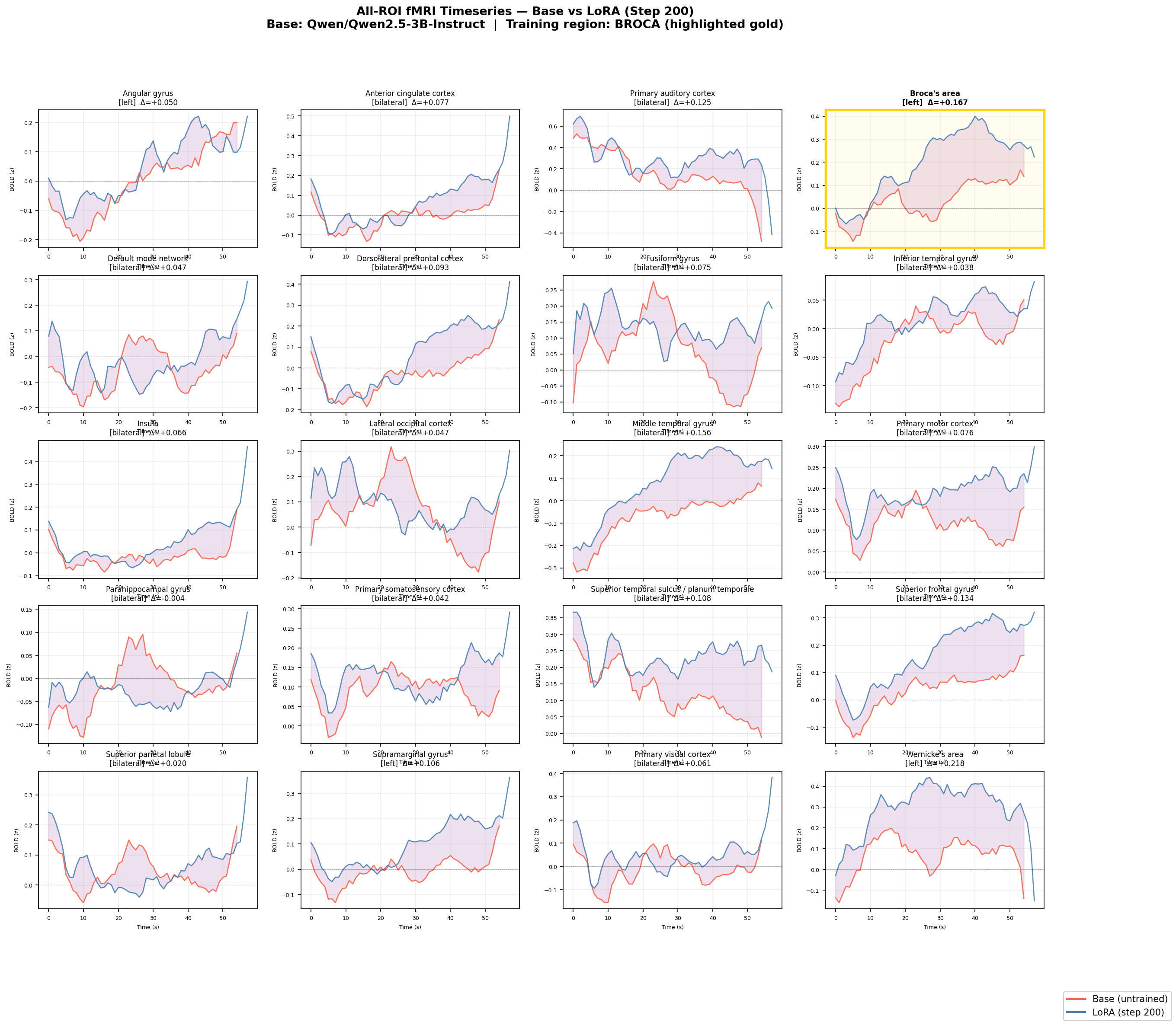
BOLD timeseries for all 20 cortical regions

BOLD timeseries — all 20 regions

The model learned to write differently. Without being told how, it shifted from scene-setting prose to dialogue-driven narrative — exactly the style that predicts higher BOLD in Broca's, Wernicke's, and STS regions.

Read the full write-up →

Experiment 2 · May 29, 2026

The brain-trained model also writes better. Five benchmarks confirm it.

An independent LLM judge, MMLU regression tests, style robustness checks, syntactic complexity metrics, and MAUVE — five experiments run on the same step-200 checkpoint. The brain reward signal and human writing quality aligned on every measured axis.

+0.50
Mean quality gain across 5 axes (judge scored 1–10)
11–9
LoRA vs base in blind pairwise comparison across 20 prompts
0%
MMLU regression — factual knowledge fully intact
5/5
Quality axes where LoRA leads — engagement, clarity, coherence, creativity, instruction following

The brain's language network is sensitive to the same properties that make text compelling. The reward signal was neuroscientific — it had no knowledge of human preferences. Yet the two objectives aligned on every axis.

Read the eval suite →

Progress Notes · Members only

What we're learning, in writing.

Enter your email to read →
May 29, 2026Research

Brain-Trained Models Write Better. Five Benchmarks Confirm It.

We ran an independent LLM judge, MMLU, style robustness, syntactic complexity, and MAUVE against the step-200 checkpoint. The brain reward signal and human writing quality aligned on every measured axis.

May 26, 2026Research

We Fine-Tuned a Language Model Using Brain Signals. Here's What Happened.

We used TRIBE v2 as the reward signal in an RL training loop. After 200 steps, the model had learned to produce text that drives 150% higher predicted cortical activation in Broca's area.

May 23, 2026Essay

Emotion as a Specification, Not a Judgment

The generative AI industry has spent enormous effort making images more realistic. It has not given AI any mechanism to understand what an image does to the person looking at it.

May 18, 2026Progress

The fMRI Prediction Engine: Phase 1 Complete

The core of what we're building — a lightweight model that takes any visual input and outputs predicted brain activation across emotional and perceptual regions — is working.

What we're building

Emotion as a specification,
not an afterthought.

01

Neural Prediction Engine

Submit any visual asset — a photo, AI render, ad creative — and receive a map of predicted brain activation across the regions that drive emotional and perceptual response. Not vague labels. Precise neuroscience.

02

Emotion Guidance Loop

Integrate our API into any generative AI pipeline. Set a target emotional profile — aspiration, intimacy, awe, tension — and let the system iterate until the output scores for the intended feeling. Emotional coherence becomes a specification, not an afterthought.

03

Scientific Creative Signal

Know whether your image activates the precuneus for aspiration, the amygdala for threat and awe, or the fusiform cortex for intimacy and recognition — before it goes live. A precise, scientifically grounded signal for designers, AI systems, and brand strategists.